guides
What Is Crypto Casino Software? Platforms, Aggregators and Game Studios
Crypto casino software is made of three layers: game studios, aggregators and the casino platform. See what each does, how white label differs from turnkey and where crypto payments fit.
By Casino Software Hub Editorial Team · Reviewed by Casino Software Hub Editorial Team · Published Oct 30, 2026 · Updated Oct 30, 2026 · 2 min read
Key takeaways
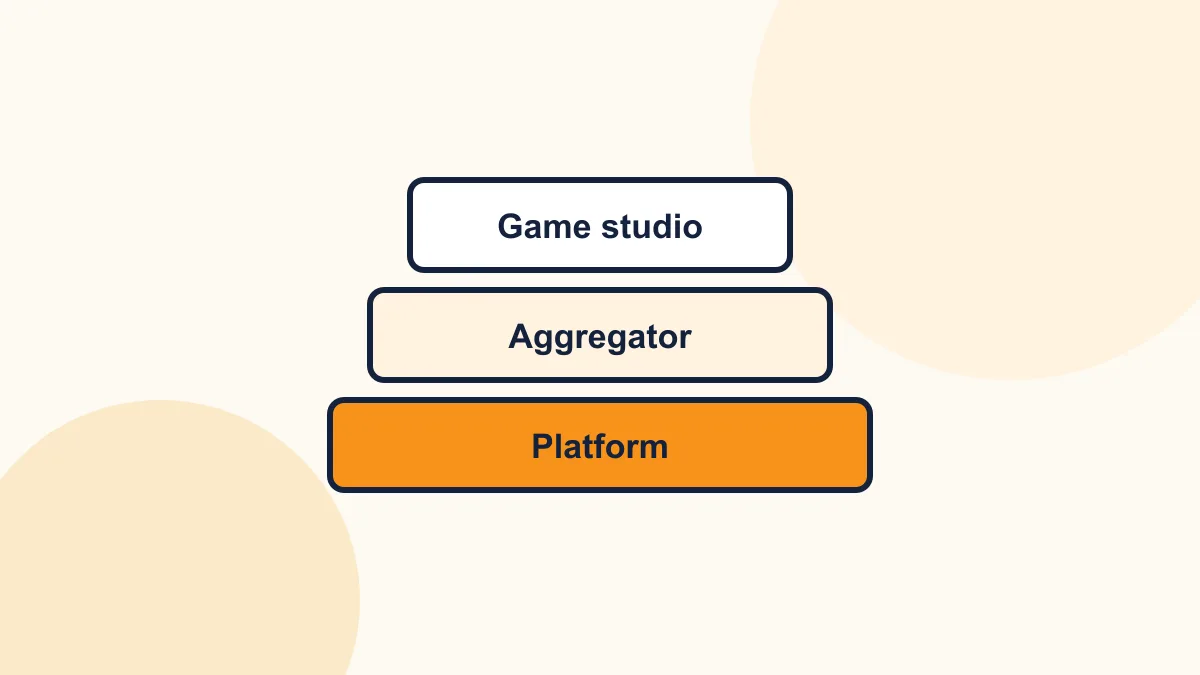
- Crypto casino software has three layers: game studios make the games, aggregators bundle them and a platform runs the casino.
- White label means the provider runs the platform (and usually the licence) under the operator’s brand. Turnkey means the platform is delivered to an operator that holds its own licence.
- The crypto part is mostly the payments layer. The games and maths are the same as at any online casino.
The three layers
Game studios build the games: slots, instant games, crash games, table games and live-dealer shows. Studios such as Pragmatic Play, Hacksaw Gaming and Play’n GO publish the specifications of their games, including RTP and volatility, and sell them to operators. Our slots catalog lists those published numbers.
Aggregators connect many studios to one operator through a single integration. An operator that uses an aggregator can add or remove studios without new technical work.
The platform is the casino itself behind the website: player accounts, wallets, bonus rules, risk checks, reporting and the admin tools. Operators either build this in-house or buy it from a provider. See our list of crypto casino software providers.
White label versus turnkey
In a white-label setup the provider supplies the platform, hosting and usually the operating licence, and the operator brings the brand and marketing. In a turnkey setup the provider delivers the platform and the operator, who holds its own licence, runs the business.
Neither model changes the rules for players. Whichever licence the operator uses decides which regulator handles complaints, and the quality of that regulation varies widely.
Where crypto fits
What makes a casino a crypto casino is the payments layer: deposits and withdrawals in coins such as Bitcoin, Ethereum, Litecoin or stablecoins, handled through wallets and payment processors. Some platforms also support provably fair games.
Crypto payments bring their own risks: transfers cannot be reversed, network fees apply and a coin’s price can move between deposit and withdrawal.
What to check as a reader
- Which licence the operator holds and which regulator is named.
- Whether the game list names its studios and shows RTP for each game.
- Whether the casino offers limits and self-exclusion tools. See our responsible gambling page.
This article is information, not advice to gamble. You must be 18 or older.
FAQ
What is the difference between a game studio and a casino platform?
A game studio builds games such as slots and crash games. A casino platform is the back end of the casino: player accounts, payments, bonuses, risk and reporting. Many casinos combine games from dozens of studios on one platform.
What does a game aggregator do?
An aggregator gives an operator one technical integration and one contract for the games of many studios. This is why a new casino can launch with thousands of games without integrating each studio.
Do crypto casinos need different software?
The games are the same. The difference is in the platform's payments layer, which must handle wallets, network confirmations and exchange rates, and often shows balances in several currencies.