guides
Crash Games Explained: Multiplier Curve, House Edge and Provably Fair Seeds
How crash games work: a rising multiplier, a hidden crash point, a built-in house edge and seeds that let players verify each round. Why they count as instant games.
By Casino Software Hub Editorial Team · Reviewed by Casino Software Hub Editorial Team · Published Oct 30, 2026 · Updated Oct 30, 2026 · 3 min read
Key takeaways
- A crash game shows a multiplier that rises from 1.00x until it crashes at a random point. A player is paid the multiplier at the moment of cashing out, or loses the stake if the crash comes first.
- The operator’s edge is built into the distribution of crash points, not into the animation.
- Most crash games are provably fair: the result is committed in advance and can be checked afterwards.
How a round works
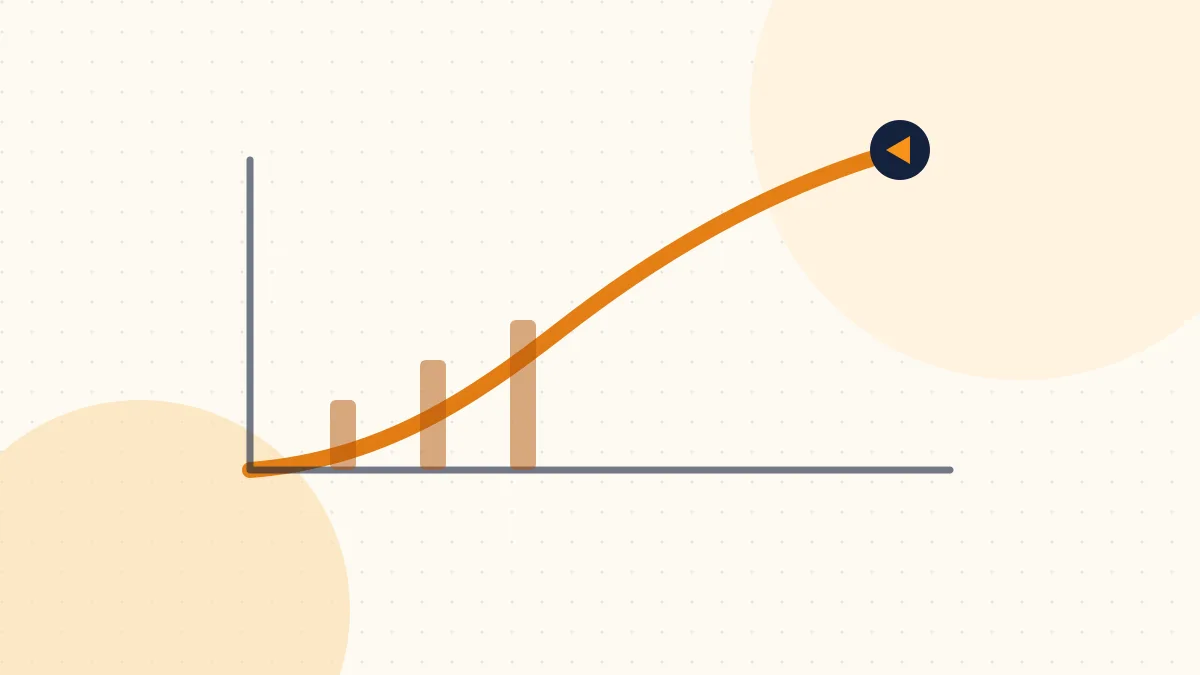
A round starts with a short betting window. The multiplier then begins at 1.00x and climbs, usually with an accelerating curve. At a point the game has already determined, the curve stops and the round ends. Players who cashed out before that point receive their stake multiplied by the value shown. Players still in the round lose their stake.
The decision is single and binary: when to cash out. Many games also offer an automatic cash-out target, which removes the timing element.
The multiplier curve is a display
The visible curve is an animation. The crash point is drawn from a random number before the round, and the animation simply runs up to it. The shape of the curve carries no information about when it will end, and past rounds do not influence the next one. Each round is independent.
Where the house edge sits
Crash games typically build the edge into the distribution of crash points. In one common design the probability of the multiplier reaching at least m is about 0.99 divided by m. That is a 1% house edge in this example; actual figures differ by game and are published by the studio or the operator.
The consequence is easy to check. Cashing out at 2x succeeds about 49.5% of the time, so the expected return is 2 × 0.495 = 0.99 per unit staked. Cashing out at 10x succeeds about 9.9% of the time, and 10 × 0.099 = 0.99 again. The target changes how often a round pays and how large payouts are, which is variance. It does not change the expected return. For the underlying arithmetic see house edge and RTP maths.
Provably fair seeds
Many crypto-focused crash games use a provably fair scheme. The server commits to a secret by publishing its hash before play. The player’s side supplies a client seed, and the crash point is computed from the combination. After the round, or after the seed is rotated, the server reveals the secret so anyone can recompute the hash and the result.
This proves that the outcome was not changed after bets were placed. It does not prove that the house edge is low. Our guide to provably fair games covers the verification steps.
Why they are instant games
Instant games are short, single-decision products with no reels or bonus rounds. Crash sits in the same group as dice and mines-style games. A round can finish in seconds, so many rounds are possible in a short time. Because the edge applies to every round, the number of rounds per hour affects how quickly the expected loss accumulates.
| Feature | Crash game | Typical video slot |
|---|---|---|
| Player decision | When to cash out | None after the spin |
| Round length | Seconds | Seconds |
| Features | None | Free spins, multipliers, bonus rounds |
| Edge shown as | House edge or RTP | RTP |
Software side
Crash titles come from studios and from in-house teams at operators and platforms. They are lightweight to integrate and are usually listed under instant or originals categories. For how studios, aggregators and platforms fit together, see what crypto casino software is. Limits and self-exclusion tools are covered on our responsible gambling page.
This article is information, not advice to gamble. You must be 18 or older.
FAQ
How does a crash game decide when to crash?
The crash point is generated before the round starts, usually from a hashed seed and a random value. The multiplier animation only reveals a number that was already fixed.
Does cashing out earlier change the house edge?
In a standard design, no. The chance of reaching a multiplier falls in proportion as the multiplier rises, so the expected return per unit staked is the same at every cash-out target. Only the variance changes.
Why are crash games called instant games?
Each round is short, has one decision and is settled in seconds. There are no reels, paylines or bonus features, which is why catalogs group them with other instant games.